
Cadillac's $100 Million Bet: Pérez Extension Is a Market Decision, Not a Performance Call
कैडिलैक F1 ने सर्जियो पेरेज़ का अनुबंध तीन साल के लिए बढ़ाया है, जो 2029 तक चलेगा। रिपोर्ट के अनुसार कुल डील लगभग 100 मिलियन डॉलर और सालाना वेतन करीब 33 मिलियन डॉलर है, जिसमें बोनस शामिल बताए गए हैं — यह आंकड़ा ESPN के जोस एंटोनियो कोर्टेस से आया है, जबकि बाकी सभी संख्याएं बिना स्रोत के हैं और सत्यापन योग्य हैं। इस समय टीम और पेरेज़ दोनों के शून्य अंक हैं तथा कैडिलैक ड्राइवर्स और कंस्ट्रक्टर्स दोनों चैंपियनशिप में अंतिम स्थान पर है। तुलनात्मक वेतन सूची में पेरेज़ (करीब 33 मिलियन) लेक्लेर और रसेल (करीब 34 मिलियन) के स्तर पर हैं, जबकि नॉरिस करीब 30 मिलियन पर हैं — यानी वेतन खेल-प्रदर्शन से नहीं, बाज़ार और प्रायोजक मूल्य से तय होता है। सबसे महत्वपूर्ण तकनीकी-वित्तीय तथ्य यह है कि FIA लागत सीमा में ड्राइवर का वेतन शामिल नहीं होता, इसलिए यह खर्च कार के विकास बजट को प्रभावित नहीं करता और कैडिलैक के लिए संरचनात्मक रूप से सस्ता है। मुख्य जोखिम वित्तीय सॉल्वेंसी नहीं, बल्कि अवसर लागत है: 2027-2029 तक सीट बंद होने से टीम किसी शीर्ष या उभरते ड्राइवर को नहीं ला सकती।
Cadillac, Formula 1's newest entrant, has extended Sergio 'Checo' Pérez's contract for three years, running through 2029. According to the report, the deal is worth approximately $100 million in total, with an annual salary of roughly $33 million, bonuses said to be included. That figure is attributed to ESPN's José Antonio Cortés — and it is the only number in the entire story tied to a named source. Every other figure, whether the total deal value or the comparator salaries, arrives unsourced. That is the story's most significant journalistic weakness. In F1, teams, FOM and the FIA do not publicly disclose driver pay; the numbers that circulate are journalistic estimates. The $100M and $33M should therefore be read as claims to be verified, not as facts.
The arithmetic does not quite reconcile
The report presents three numbers together: a three-year term running to 2029, a $100 million total, and $33 million per year. These reconcile only if you accept 3 × 33 ≈ 99M. But if the deal actually spans four seasons — 2026 through 2029 inclusive — the total would be roughly $132 million. At least one of the three figures is imprecise, and it is impossible to determine which. A second, subtler point: 'bonuses already included' is the most under-read phrase in the piece. If the $33M headline includes performance bonuses and the team has scored zero points, the guaranteed base may be materially lower. In that case $33M is not the real year-one cost — it is a ceiling.

The on-track reality: two cars, zero points
Sportingly, the picture is unambiguous. Neither Valtteri Bottas nor Pérez has scored. The team sits at the bottom of both the Drivers' and the Constructors' Championships. This is Cadillac's first season, so the outcome is not shocking in itself — but it remains true that the season is well advanced and both cars are blank in the points column. Backmarkers in F1 normally convert at least one chaotic race — safety car, rain, attrition — into a point. Failing to do so suggests the binding constraint is the performance floor, not luck. That distinction matters: operational deficits can be fixed; structural ones cannot, at least not within a season.
Pay versus results
The comparator salaries in the report are its sharpest element. They place Max Verstappen at around $70M, Lewis Hamilton at $60M, Charles Leclerc and George Russell at roughly $34M, Pérez at about $33M, and Lando Norris at $30M. None of these is sourced, but taken at face value they produce an uncomfortable conclusion: Pérez is priced at the Leclerc/Russell tier — fourth to sixth on the grid. That is where the contradiction becomes acute. A 36-year-old driver whose team is last in both championships and who has not scored a point would conventionally command a low-eight-figure sum at most. The implied premium is on the order of 100 to 200 percent, and it is not sporting — it is commercial.

The cost cap: the argument the story omits
The key to understanding the deal is entirely absent from the article. Driver salaries sit outside the FIA Cost Cap — excluded alongside the highest-paid employees. The direct implication is that Cadillac can pay a driver whatever it likes without a single dollar of impact on the car-development budget. The contract is structurally cheap. For a new team, that is the single greatest financial freedom available, and it explains why a $33M figure imposes no development burden. The flip side is opportunity cost. Locking the seat for three years removes Cadillac's option to sign a rising talent or a proven front-runner for 2027–2029 — precisely the window in which a new team's car should become attractive to elite drivers. The renewal converts a flexible seat into a sunk commitment.
Bottas: the internal benchmark nobody used
The report notes that both Bottas and Pérez are scoreless, but discloses only Pérez's salary. Bottas's pay is unknown. That information gap is itself a story: near-identical results, very different price. It is the cleanest internal comparison available to journalists, and the article does not use it.
Where the pressure actually sits
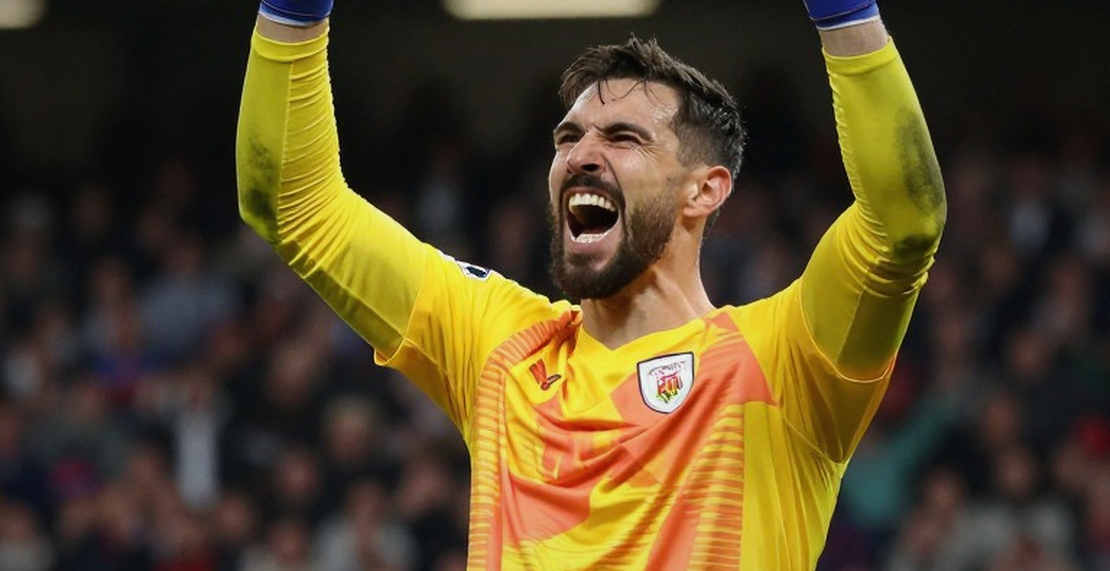
Crucially, the reputational risk lands on the driver, not the team. A new entrant being slow is expected and often forgiven. A top-six earner running last becomes a story. The pay ranking has converted a sporting problem into a personal one. Pérez himself appears aware of this. He described the period as a 'learning and development stage aimed at building a better car for next year' — pre-emptive expectation management, and evidence that the driver already sees the pay-versus-performance frame closing in. Commercially, the timing around the Mexico City Grand Prix is unlikely to be coincidental; that race is his de facto home showcase, and the Telmex association visible in the photo caption points to the market logic behind the deal. The criticism will peak there too.
Is this a waste of money?
Not in the way a bidding-war overpay in football would be. This reads as an anchor premium — a new entrant buying credibility, a guaranteed market and a sponsor network in one transaction. It is also plausible that Pérez's personal sponsor portfolio co-funds part of the salary, a standard arrangement for drivers from commercially strategic markets. If so, Cadillac's net cost is below the reported figure and the overpay narrative collapses. One further point the article does not address but industry logic expects: given the gulf between pay tier and results tier, a performance or termination clause is highly likely to exist. Its total absence would be commercially unusual for a new entrant. The 2029 end-date may also be anchored to a regulatory or power-unit milestone rather than the driver's sporting peak — suggesting the contract was drafted by the commercial department, not the technical one.
An honest note on the racing picture
This report contains almost no technical information. There is no car concept, no upgrade path, no aero, engine or set-up detail. There are no lap-time deltas, qualifying gaps, top-speed or reliability figures. Any tactical conclusion about the car is therefore inference, not analysis. What can be said is that as a new team, Cadillac almost certainly operates under restricted aerodynamic testing and wind-tunnel allocation, which mechanically caps the slope of its in-season development curve. That is external regulatory knowledge, not part of the report, and should be held at medium confidence only.
What comes next
Cadillac's 2026 will be measured not in points but in reliability and data correlation — Pérez's own framing points that way. The real test arrives in 2027. If the car begins to close the gap, this contract will look like a strategic bet. If the team is still in the same place, the 'learning stage' language will start to ring hollow and the questions will shift to management rather than the driver. The honest verdict for now: this is a financial and marketing transaction wearing a sporting headline. On-track justification is not yet visible. And because driver pay does not compete with car development under the cost cap, the mistake is cheap for Cadillac — but the price may be paid in credibility and in access to the next generation of drivers.