
Kabaddi Champions League Expands to 10 Teams With a Rs 5 Crore Purse — But the Real Story Is Buried in PKL's Broadcast Crisis
**कबड्डी चैंपियंस लीग क्या है?** हरियाणा में खेली जाने वाली एक प्रादेशिक, अर्ध-पेशेवर कबड्डी फ्रैंचाइज़ी लीग। अगले सत्र में यह 8 से बढ़कर 10 टीमों के साथ खेली जाएगी। सभी दस फ्रैंचाइज़ी हरियाणा के शहरों की हैं — भिवानी, रोहतक, करनाल, गुरुग्राम, सोनीपत, पानीपत, फरीदाबाद, हिसार, झज्जर और कुरुक्षेत्र। **नीलामी पर्स कितना है?** प्रति फ्रैंचाइज़ी 5 करोड़ रुपये (लगभग 6 लाख अमेरिकी डॉलर)। यह इनामी राशि नहीं, बल्कि टीम बनाने का कुल बजट है। रिपोर्ट में यह स्पष्ट नहीं कि यह प्रति टीम है या पूरी लीग का संयुक्त पर्स। तुलनात्मक रूप से PKL फ्रैंचाइज़ियां इससे कई गुना अधिक खर्च करती हैं। **सबसे महंगे खिलाड़ी कौन रहे?** आयन लोचब, 17.4 लाख रुपये में। सुनील मलिक, जिन्हें रिपोर्ट 'भारत का एशियाई खेल कप्तान' बताती है, 10 लाख रुपये में बिके। रिपोर्ट में किसी भी खिलाड़ी का प्रदर्शन आंकड़ा (रेड पॉइंट, टैकल पॉइंट, सफलता दर) नहीं दिया गया है। **ट्रायल्स में कितने खिलाड़ी आए?** करीब 6,400 पंजीकरण, जिनमें से 300 से अधिक नीलामी पूल में चुने गए। यह आपूर्ति पक्ष का आंकड़ा है — ग्रामीण युवाओं में खेल अवसर की भारी मांग — न कि दर्शकों की लोकप्रियता का प्रमाण। **इस खबर का सबसे अहम तथ्य क्या है?** PKL का 13वां सीजन कथित तौर पर जून-जुलाई 2027 तक टल सकता है, क्योंकि नया मीडिया/ब्रॉडकास्ट राइट्स समझौता नहीं हुआ है। कबड्डी का पूरा व्यावसायिक ढांचा PKL पर टिका है, इसलिए यह गंभीर पारिस्थितिकीय जोखिम है। **क्या यह PKL के बराबर है?** नहीं। पैमाना, बजट, भौगोलिक दायरा और प्रतिभा स्तर — तीनों में यह PKL से नीचे है। इसे राष्ट्रीय लीग नहीं, हरियाणा की क्षेत्रीय विकास लीग मानना चाहिए। **अनिश्चितताएं क्या हैं?** लीग का AKFI/IKF सैंक्शन, खिलाड़ी अनुबंध, एंटी-डोपिंग नियम, प्रसारण अधिकार, स्पॉन्सरशिप और दर्शक संख्या — इनमें से किसी की भी पुष्टि रिपोर्ट में नहीं है। 'एशियाई खेल कप्तान' के दावे का भी स्वतंत्र सत्यापन नहीं हुआ है।
The Kabaddi Champions League will field 10 teams instead of 8 next season, with a Rs 5 crore auction purse allotted to each franchise. On the surface this reads as a straightforward show of confidence — two new teams, a bigger budget, and more than 300 players going under the hammer. But a single fact buried in the fourth paragraph of the same report changes the meaning of the entire exercise: Season 13 of the Pro Kabaddi League (PKL) may be pushed to June-July 2027 because of an unresolved broadcast-rights situation. A regional league is announcing expansion at precisely the moment the sport's national commercial anchor is stalled. Whether that expansion is durable or simply opportunistic depends entirely on how you read the numbers.
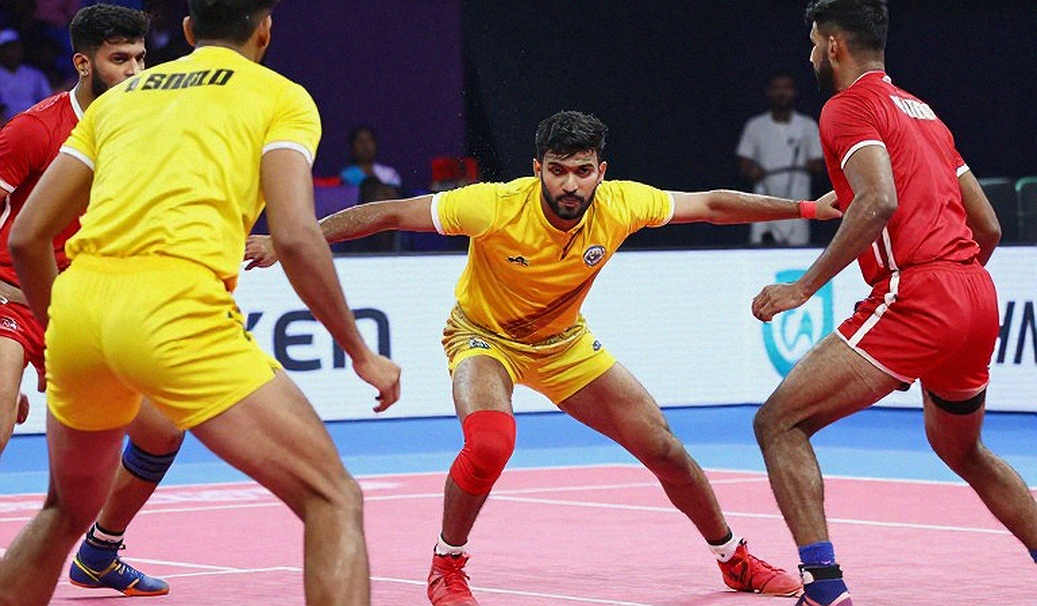
The most expensive buy of this auction was Ayan Lochab at Rs 17.4 lakh. On the other side is Sunil Malik, described in the report as India's Asian Games captain, who went for Rs 10 lakh. Put those two figures side by side and you get a picture that raises questions about both the league's scale and its internal market logic.
The shape of the expansion
The ten franchise cities are Bhiwani, Rohtak, Karnal, Gurugram, Sonipat, Panipat, Faridabad, Hisar, Jhajjar and Kurukshetra. Every one of them is in Haryana. The name carries a national and international ring; the footprint is entirely provincial. There is no presence in Maharashtra, Punjab, Tamil Nadu or Uttar Pradesh — states with deep kabaddi traditions.
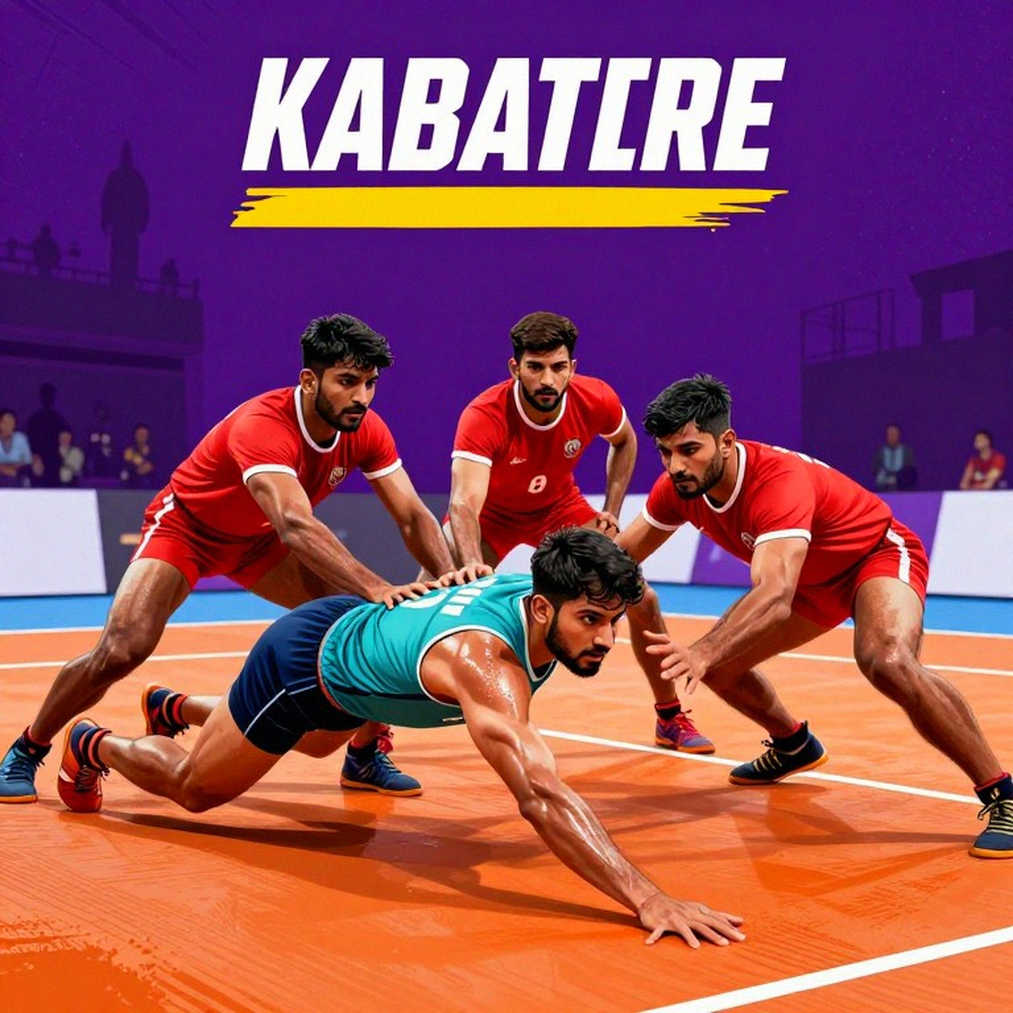
That alone tells you what this league is not. It is not a competitor to PKL. It is a regional competition operating one tier below, and treating it as a national league would be a category error.
The expansion arithmetic matters too. A round-robin with 8 teams produces 28 matches; with 10 teams it produces 45 — roughly a 60 per cent increase in fixtures. If the season length stays the same, that is a heavier load on scheduling, travel and logistics. If the season is extended, costs rise. The report does not say where the additional money comes from.
Reading the Rs 5 crore purse correctly
A word on terminology first. The 'auction purse' is not prize money. It is the total squad-building budget available to each franchise at the player auction. Rs 5 crore is roughly US$600,000.
Set that against PKL. Pro Kabaddi franchises have historically spent several multiples of that on squad construction. A Rs 5 crore budget is not a figure from which anyone challenges PKL — it is a developmental or semi-professional tier budget.
There is also a basic ambiguity. The report does not clarify whether Rs 5 crore is per franchise or a league-wide pool. The phrasing about franchises having 'greater scope to assemble their squads' implies per-franchise, but that is inference, not confirmed fact. The distinction materially changes any economic interpretation.
One more piece of arithmetic. If Rs 5 crore is per team and squads run to about 18 players, the implied average spend is roughly Rs 27-28 lakh per player. Yet the highest price paid was Rs 17.4 lakh. Either squads are much larger than 18, or the budget is not being fully spent. Both possibilities suggest a mismatch between available money and available talent. This is speculative arithmetic and should be read with caution.
What 6,400 trialists actually signals
The league reports around 6,400 registrations at its trials, with more than 300 players making the auction pool. This figure is routinely presented as evidence of popularity, which is a misreading. 6,400 registrations measure how many young people in Haryana's villages and small towns are trying to build a career in the sport. That is a supply-side number, not a demand-side one.
Nowhere in the report is there attendance data, ticket sales, television ratings or social media engagement. There is no way to say how many people watch this league. And if nobody is watching, why would sponsors come — and if sponsors do not come, where does the Rs 5 crore purse come from next season?
The question matters because a crowd of 6,400 trialists does not mean the league is strong. It means opportunity is scarce and demand for it is enormous. In India's rural sports economy, government jobs and sports quotas are powerful incentives. Kabaddi is one of the few routes through which a village athlete can enter the formal sports economy.
The player market: Rs 17.4 lakh versus Rs 10 lakh
The top price was Ayan Lochab at Rs 17.4 lakh. The report says nothing about his position, raid points, tackle points or success rate. We know the price; we do not know the performance. Player quality is judged on statistics, not price tags — and here the statistics simply do not exist.
Then there is Sunil Malik, described as India's Asian Games captain, bought for Rs 10 lakh. In any sport, a national-team captain commanding less than the top-priced player is unusual. There are three possible explanations: the designation is dated and he is no longer at that level; the captaincy refers to a different format or edition; or the reporting itself is in error. None can be resolved without independent verification.
This is an internal inconsistency worth flagging. Either the 'Asian Games captain' label is decorative, or the market is not pricing international pedigree at all. Both readings say something about the league's professional level.
A useful comparison: star raiders in PKL have historically commanded upwards of Rs 1 crore. This league's top price is roughly one-sixth of that. Even by domestic Indian standards, the low absolute salaries suggest most players are part-time or semi-professional, retaining other sources of income.
The story that is not in the headline
The most important fact in the report is not in the headline. PKL Season 13 may be pushed to June-July 2027, reportedly because a new media-rights deal has not been signed. For kabaddi, this is not routine scheduling.
PKL launched in 2026 and turned kabaddi into a television sport. The entire commercial architecture of the game — sponsorship, player salaries, broadcast revenue and, indirectly, the national-team pipeline — rests on it. If the league has no broadcast partner and no visible replacement, that is not a one-season delay but a commercial shock to the whole ecosystem.
The Champions League's expansion should be read in that light. When the top league is dormant, a lower-tier league gets first access to idle talent. That is a sensible strategic move, but presenting it as evidence of the league's growing strength is misleading. It is opportunism, not achievement.
There is a ceiling too. A regional league with all ten teams in one state cannot fill the gap PKL leaves. It can absorb part of the vacuum, not all of it.
Haryana: from the akhada to the contract
Haryana is widely regarded as India's sports nursery. Wrestling and kabaddi are woven into rural life. When an athlete groomed on the mud of an akhada appears on television, it is not just a sports story — it is a story of social mobility: village boy, contracted athlete, a stable income for the family.
The 6,400 registrations are part of that story. The sentiment is authentic and consistent with Haryana's rural sports economy. But sentiment is not livelihood. The report does not say how many players earned a stable income, how long contracts actually run, or whether health insurance and injury cover exist. In a market where the top price is Rs 17.4 lakh, those answers are not going to be comfortable.
The name deserves scrutiny as well. Borrowing the 'Champions League' brand from European football is a deliberate attempt to borrow prestige. It signals ambition that runs ahead of reality, and it can leave audiences confused about the level of competition they are watching.
The business picture: what is missing
Four things are used to assess a league's commercial health: broadcast rights, sponsorship, attendance and revenue. Not one of them appears in the report. Expansion and an increased purse have been announced, but not a single revenue line has been confirmed.
That is the biggest gap. Without a broadcast deal, reach stays limited. Without sponsorship, the purse has to be funded from outside. And it cannot be ruled out that the purse is being subsidised by franchise owners or a promoter — a common pattern among early-stage non-cricket leagues in India.
The league's central vulnerability is that its model is supply-led rather than demand-led. Trial crowds, new teams, a bigger budget — all supply signals. Mistaking them for popularity is the classic error that several Indian leagues have made before folding.
Governance: the unanswered question
Who sanctions this league? Is it approved by the Amateur Kabaddi Federation of India (AKFI) or the International Kabaddi Federation (IKF)? The report is silent. That silence is itself a warning.
If the league is unsanctioned, players could face eligibility complications in national-team selection — a serious risk for anyone with international ambitions. Contract terms, injury protection, anti-doping arrangements and officiating standards are all undocumented.
Such gaps are normal for a young league. They are more concerning for one expanding quickly, because a fragmenting player market invites conflict with the national framework.
Risks and what to watch
The biggest risk is not in this league. It is in PKL's broadcast crisis. For a sport that lives on television and short-format packaging, losing a broadcast partner with no replacement in sight is the defining challenge. If it drags on, coaching pipelines, player wages and sponsorship all suffer.
The second risk is governance and revenue opacity. The third is that low wages will not retain top talent. The fourth is that a heavier fixture load cannot be carried without additional income.
Four signals are worth tracking. First, whether PKL signs a new media-rights deal and when Season 13 is confirmed. Second, whether this league receives AKFI or IKF sanction. Third, whether any television or digital broadcast deal is announced. Fourth, whether Sunil Malik's 'Asian Games captain' credential can be verified against official rosters. Any one of these answers could redraw the picture.
Conclusion
The Kabaddi Champions League's expansion to 10 teams is a real event, but a small one. It is a Haryana regional league with a name that sounds national. A Rs 5 crore purse and a Rs 17.4 lakh top price confirm that this is a market below PKL. The 6,400 trialists remain its strongest and most authentic data point.
But the most important part of this story never made the headline: PKL's broadcast crisis. That will determine the direction of Indian kabaddi over the next two years. The Champions League may prove a useful waypoint during that crisis. It cannot be a substitute for the anchor.
Editorial note: this report is based on a single media report in which most claims carry no named source. Auction figures, player designations and PKL scheduling details have not been independently verified and should be read with caution. This material is for sports-industry information only and does not constitute betting advice.